
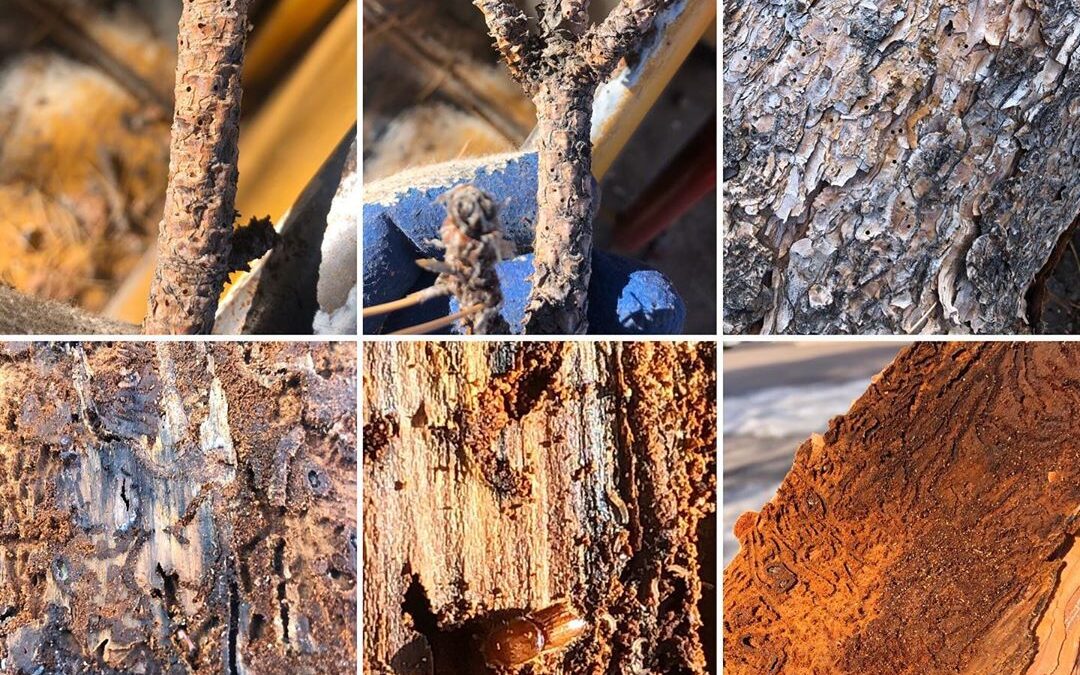
What are Ips beetles?
Have you noticed browning needles on your pine tree this summer? It could be more than drought stress. Ips beetles are becoming increasingly active during hot, dry conditions and can quickly overwhelm already stressed trees.
Ips beetles, also called engraver beetles, are small bark beetles that attack pine trees. They tunnel beneath the bark, disrupting the tree’s ability to move water and nutrients. Once established, they can cause rapid decline.
Why are Ips beetles worse this year?
Ips beetles are a common pest in Colorado, but environmental conditions can influence how much damage they cause. This year’s extended heat and drought have placed many pine trees under additional stress, reducing their natural ability to fight off beetle attacks. As a result, arborists are seeing more infestations and faster tree decline.
What are the signs of an Ips beetle infestation?
Early detection is important. Watch for these common signs of an Ips beetle infestation:
- Needles turning yellow, then reddish-brown
- Pitch tubes (small popcorn-like globs of sap) on the trunk
- Fine sawdust collecting in bark crevices or at the base of the tree
- Tiny holes in the bark where beetles have entered
- Thinning foliage or branch dieback
Can an infested tree be saved?
It depends on how early the infestation is detected. Trees with only a few symptoms may be treatable, but heavily infested trees often cannot recover. Early diagnosis is critical.
How can I protect my pine trees?
Prevention is the most effective defense against Ips beetles. Keeping your trees healthy helps them better resist attack:
- Water deeply during hot, dry weather.
- Have your trees inspected if you notice early signs of decline.
- Consider preventative treatments for healthy, high-value pine trees in areas with known Ips activity.
When should I call an arborist?
If your pine tree is browning unexpectedly or showing any signs of beetle activity, don’t wait. Early intervention offers the best chance of protecting your tree, and may help prevent Ips beetles from spreading to nearby pines.
Need a professional opinion? Our ISA Certified Arborists can inspect your trees, identify the cause of decline, and recommend the most effective treatment plan to keep your landscape healthy.





Recent Comments